Most of Your Blood Sugar Ends Up in Your Muscle, Which Is Why Strength Is Metabolic Care
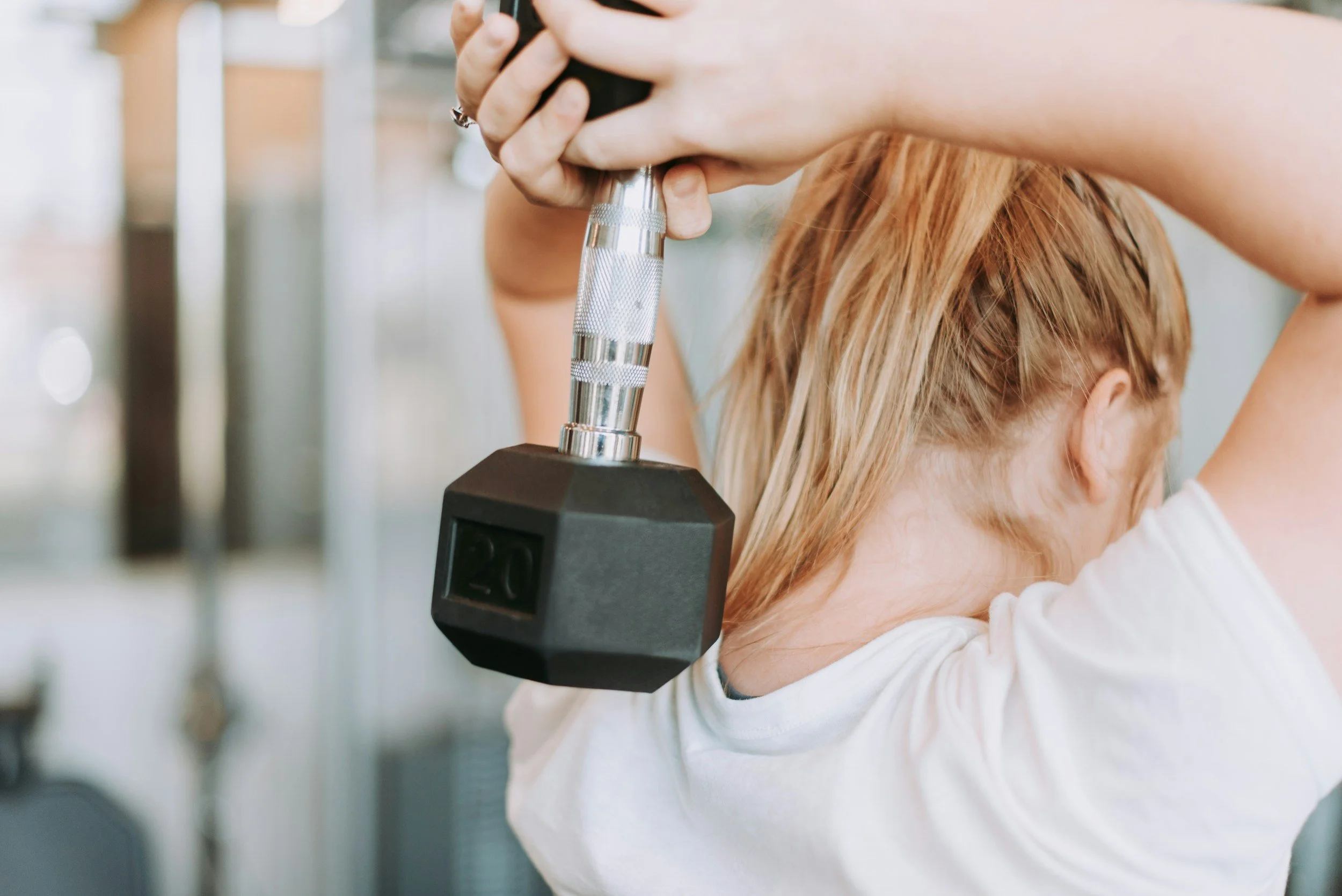
Muscle isn't just about how you look or how much you can lift. It's where your body handles a large share of its glucose, and it changes with your hormones.
Most women are told to move more for their heart. Or their weight. Or their mood.
All true. But there's a reason that gets much less airtime, and for metabolic health it may matter most.
Your muscle is where a large share of your blood sugar goes.
Muscle does more metabolic work than you'd think
After a meal, your blood sugar rises and insulin goes to work moving that glucose out of your bloodstream and into your cells.
Most of it doesn't go to fat. It goes to muscle. In studies measuring insulin-driven glucose uptake, about 80% of it happens in skeletal muscle.
That makes muscle one of the main places your body handles blood sugar. When muscle responds well to insulin, glucose clears more easily. When it doesn't, your body has to make more insulin to get the same job done, which is the early, quiet stage of insulin resistance.
More muscle, better insulin sensitivity
This isn't only about how well your muscle works. How much of it you have matters too.
In a large national study, people with more muscle relative to their body size had better insulin sensitivity and a lower rate of prediabetes pmc.ncbi.nlm.nih. Each 10% increase in relative muscle mass was linked to an 11% reduction in insulin resistance, even after accounting for age and body fat pmc.ncbi.nlm.nih.
That last part matters. It means this isn't just a weight story. Two people at the same weight can have very different metabolic pictures depending on how much of that weight is muscle.
Why it changes with your hormones
Estrogen does a lot for muscle. It supports how muscle maintains itself, and it helps muscle respond to insulin.
As estrogen declines, those protections fade. Muscle mass falls by about 0.6% a year after menopause, and lower estrogen is linked to reduced insulin sensitivity in muscle fisio2.icb.usp.
That's part of why the transition into menopause so often comes with changes that feel sudden: weight shifting to the middle, energy dropping, blood sugar behaving differently. The habits didn't necessarily change. The tissue doing the metabolic work did.
But hormones aren't the only reason muscle declines. Long stretches of low activity, under-eating protein, chronic stress, poor sleep, and low iron can all make it harder to build and keep muscle at any age.
What strength training actually does
Strength training is one of the most direct ways to work on this.
In a 2025 meta-analysis of adults with type 2 diabetes, resistance training improved insulin, insulin resistance, fasting glucose, and HbA1c, while also increasing muscle mass and strength medicine.nus.edu. And the benefits start early: a single bout of physical activity can improve insulin sensitivity pmc.ncbi.nlm.nih.
So strength training isn't only a long game. Some of what it does for blood sugar begins the day you do it.
It also doesn't have to look like a gym routine. Body-weight squats, resistance bands at home, or carrying something heavy all ask your muscles to work. What matters most is that the challenge is real, and that it happens consistently enough for muscle to adapt.
The pattern I see often: a woman who's walking every day, eating carefully, and still watching her metabolism change. Walking is great. But for many of the women I work with, the piece that's missing isn't more cardio. It's muscle.
What actually moves the needle
Lift something, consistently. National guidelines recommend muscle-strengthening activity at least 2 days a week pmc.ncbi.nlm.nih. Bands, body weight, and dumbbells all count.
Progress over time. Muscle adapts to challenge. Gradually adding weight or reps matters more than any one perfect program.
Eat enough protein, starting at breakfast. Muscle can't rebuild without it. For many women, about 30 grams at breakfast is a helpful place to start.
Don't under-eat. Chronic restriction makes it much harder to build or keep muscle.
Protect sleep and recovery. Muscle is built between sessions, not during them.
Look at what might be holding you back. If strength training feels unusually hard or you can't recover, something like low iron may be part of the picture.
A note of caution: if you have a heart condition, joint or bone concerns, are pregnant, or haven't exercised in a long time, check with your provider about where to start. Strength training is for almost everyone, but the right starting point differs.
If this sounds familiar
If you're doing a lot right and your metabolism still feels like it's shifting, muscle may be part of the explanation — along with hormones, sleep, stress, and nutrients that deserve a closer look together.
That's the kind of full picture we work through at Rooted. To get started, fill out the Start Here form. Once it's in, you'll be able to schedule your first visit.
— Miranda Rozecki, FNP-BC, IFMCP
References
Abdul-Ghani MA, DeFronzo RA. Pathogenesis of insulin resistance in skeletal muscle. Journal of Biomedicine and Biotechnology, 2010. https://pmc.ncbi.nlm.nih.gov/articles/PMC2860140/
Srikanthan P, Karlamangla AS. Relative muscle mass is inversely associated with insulin resistance and prediabetes: findings from the third National Health and Nutrition Examination Survey. Journal of Clinical Endocrinology & Metabolism, 2011. https://pubmed.ncbi.nlm.nih.gov/21778224/
Wang J, Fan S, Wang J. Resistance training enhances metabolic and muscular health and reduces systemic inflammation in middle-aged and older adults with type 2 diabetes: a meta-analysis. Diabetes Research and Clinical Practice, 2025. https://pubmed.ncbi.nlm.nih.gov/41106502/
Wright VJ, Schwartzman JD, Itinoche R, Wittstein J. The musculoskeletal syndrome of menopause. Climacteric, 2024. https://www.tandfonline.com/doi/full/10.1080/13697137.2024.2380363
U.S. Department of Health and Human Services, Office of Disease Prevention and Health Promotion. Physical Activity Guidelines Questions & Answers. 2025. https://odphp.health.gov/our-work/nutrition-physical-activity/physical-activity-guidelines/about-physical-activity-guidelines/questions-answers