Iron Deficiency Isn't the Same as Anemia and the Difference Matters If You're Exhausted

Why your iron stores can run low long before your blood count changes, and what that can feel like day to day.
The stairs feel harder than they should.
Your workouts stall. More hair than usual in the brush. Your legs won't settle at night. And the tiredness isn't the kind a weekend fixes.
At some point, someone checked for anemia. You weren't anemic. So iron was crossed off the list.
Here's the thing: iron deficiency and anemia aren't the same diagnosis. One usually comes long before the other.
Iron runs out in stages
Your body keeps a reserve of iron, mostly stored as ferritin. When you lose more iron than you take in, that reserve drains first.
Hemoglobin, the number that defines anemia, is usually one of the last things to change. Iron stores can be depleted while hemoglobin still sits inside its usual range.
So "not anemic" answers one question: has iron loss reached the point where red blood cell production is affected? It doesn't answer the earlier one: is your iron reserve running low?
What it can feel like
Iron deficiency without anemia isn't a silent stage. It's been linked to fatigue, reduced work performance, and lower cognitive function.
Women describe:
Fatigue that doesn't match how much they're sleeping
Brain fog and trouble focusing
Shortness of breath or a pounding heart with exertion
Workouts that feel harder, with slower recovery
Hair shedding and brittle nails
Restless legs, especially at night
Low mood or irritability
None of these is specific to iron. That's exactly why it gets missed. Each one has a dozen possible explanations, and iron is easy to skip once anemia is ruled out.
More common than most women are told
This isn't a rare finding. In one large screening study, 38% of non-pregnant females tested had iron deficiency without anemia, nearly three times the rate of iron-deficiency anemia. A national US study of young females found almost 40% had iron deficiency, while only 6% had anemia.
Those numbers show the gap clearly. Screening for anemia alone would miss most of them.
Why women lose iron
Menstruation is the most obvious reason. A typical cycle costs 10 to 20 mg of iron, and heavier bleeding raises the risk of deficiency further. Heavy menstrual bleeding is common and underdiagnosed, and it's thought to account for roughly a third or more of iron-deficiency anemia in women of reproductive age.
That's one reason I ask detailed questions about periods, even when someone comes in for fatigue. "Normal for me" is often a period that has quietly gotten heavier over the years.
Low intake, absorption problems, and other sources of blood loss can play a part too. Finding where iron is going matters as much as replacing it.
Why the number on the page needs context
Ferritin is the usual way to estimate iron stores, but reading it well takes context.
The cutoffs used to define "low" vary widely between labs and guidelines. A recent clinical review notes that ferritin below 50 lines up with biochemical signs of iron deficiency, a higher threshold than many lab ranges flag. In one trial, women with unexplained fatigue and ferritin below 50 saw their fatigue scores improve significantly more with iron than with placebo, even though none of them were anemic.
Ferritin also rises with inflammation, which can make a low reserve look adequate. That's why a single value, read on its own, can be misleading.
The pattern I see often: long-standing fatigue, periods that are heavier than they used to be, ferritin that technically clears the lab's lower limit, and a list of symptoms that were each explained some other way.
The thyroid connection
Iron is also needed to make thyroid hormone. A 2023 meta-analysis found that people with iron deficiency had significantly lower thyroid hormone levels than people without it.
So if you're already dealing with a thyroid condition, or symptoms that feel thyroid-related, iron status is part of the full picture.
What actually moves the needle
Finding the reason. Replacing iron without knowing why it's low treats the number, not the pattern.
Taking periods seriously. Heavy bleeding is a medical issue, not just something to push through.
Reading iron in context. Symptoms, inflammation, and history change what a value means.
Food first, consistently. Iron-rich foods matter, even when they aren't the whole answer.
Retesting. Repletion takes time, and follow-up shows whether it's working.
A note on what I won't do here: recommend a specific iron product or dose. Iron isn't harmless to take on a guess. Too much can cause real problems, some people shouldn't supplement at all, and the right approach depends on your labs, your history, and why your iron is low in the first place.
If this sounds familiar
If you've been tired for a long time and iron was ruled out because you weren't anemic, it may be worth a second look.
The first step is the Start Here form. Tell me what's been going on, and once it's in, you'll be able to schedule from there.
— Miranda Rozecki, FNP-BC, IFMCP
References
Vaucher P, Druais PL, Waldvogel S, Favrat B. Effect of iron supplementation on fatigue in nonanemic menstruating women with low ferritin: a randomized controlled trial. CMAJ, 2012. https://www.cmaj.ca/content/184/11/1247
Sholzberg M, Hillis C, Crowther M, Selby R. Diagnosis and management of iron deficiency in females. CMAJ, 2025. https://pmc.ncbi.nlm.nih.gov/articles/PMC12237530/
Weyand AC, Chaitoff A, Freed GL, Sholzberg M, Choi SW, McGann PT. Prevalence of iron deficiency and iron-deficiency anemia in US females aged 12–21 years, 2003–2020. JAMA, 2023. https://pmc.ncbi.nlm.nih.gov/articles/PMC10300696/
National Institutes of Health, Office of Dietary Supplements. Iron: Fact Sheet for Health Professionals. 2025. https://ods.od.nih.gov/factsheets/Iron-HealthProfessional/
Garofalo V, Condorelli RA, Cannarella R, Aversa A, Calogero AE, La Vignera S. Relationship between iron deficiency and thyroid function: a systematic review and meta-analysis. Nutrients, 2023. https://pmc.ncbi.nlm.nih.gov/articles/PMC10675576/
Your Hormones Don't Only Live in Your Ovaries, Some of Them Pass Through Your Gut

Heavy periods. Breast tenderness that starts a week early. PMS that feels stronger than it did five years ago. Bloating that comes and goes with your cycle.
Most women are told these are separate problems. A hormone problem, maybe. A digestive problem, maybe. Something to manage one at a time.
But what if they're connected?
For a lot of the women I see, they are. And the connection runs through a place most hormone conversations skip entirely: the gut.
Estrogen has to leave, too
We usually talk about estrogen in terms of how much you make. We talk much less about how well you clear it.
Clearance matters just as much. Once estrogen has done its job, the liver packages it for removal and sends it into the gut to leave the body.
That's where the gut comes in. A specific group of gut bacteria, sometimes called the estrobolome, influences whether that estrogen actually leaves, or gets unpackaged and sent back into circulation.
When the gut is balanced, this system works quietly in the background. When it isn't, more estrogen can be recycled than should be. The result isn't necessarily that you make too much estrogen. It's that you're not clearing it well.
What that can look like
When estrogen clearance isn't working the way it should, the pattern often includes:
Heavier or more painful periods
Breast tenderness, especially in the second half of your cycle
PMS or mood shifts that feel more intense than they used to
Bloating, water retention, or puffiness tied to your cycle
Irregular bowel habits, constipation especially
A sense that your hormones are "loud," even when labs don't explain it
None of these alone means your gut is the cause. Together, they're worth asking about.
Why slow elimination matters more than it sounds
This is the piece I wish more women knew.
If you're not having regular bowel movements, estrogen that was meant to leave spends more time in the gut. More time means more opportunity for it to be recycled back into your body.
So constipation isn't only a comfort issue. It can be part of the hormone picture. And it's one of the first things I ask about when someone tells me their cycle symptoms have gotten worse.
Why this shows up in your 30s, 40s, and 50s
Perimenopause makes this more noticeable, not less.
Early in perimenopause, progesterone often declines before estrogen does. That leaves estrogen relatively unopposed, and if clearance is also slow, the effect compounds. It's one reason heavy periods and breast tenderness can show up in your early 40s even when they were never an issue before.
Stress, antibiotics, low fiber intake, alcohol, and poor sleep all shift the gut environment, too. Your hormones and your metabolism run on the same infrastructure, and your gut is part of that infrastructure.
What a lifestyle management approach looks like
When I'm trying to understand whether the gut is part of someone's hormone picture, I'm not only asking "what are your hormone levels?" I'm asking:
How often are you having bowel movements, and what are they like?
When did your cycle symptoms change, and did anything else change around the same time?
What does your fiber intake actually look like on a normal week?
Have you had recent antibiotics, a GI infection, or a period of high stress?
Are there signs of blood sugar instability or inflammation alongside this?
The pattern I see often: cycle symptoms that got worse in the last few years, a history of constipation or bloating nobody connected to hormones, low fiber intake, and a lot of stress. Each of those gets managed separately. Together, they point in one direction.
Testing can help clarify the picture when it's appropriate. But the history usually tells me where to look first.
What actually moves the needle
The foundations here are simple. They're just rarely framed as hormone care:
Fiber, consistently- it supports regular elimination and feeds the bacteria that help this system work
Regular bowel movements- treat constipation as a hormone issue, not only a digestive one
Plant variety- different colors and types of plants each week support a more diverse gut
Alcohol awareness- it affects both the gut environment and how the liver processes estrogen
Blood sugar stability- insulin and estrogen balance influence each other
Stress and sleep support- both shape the gut environment more than most people expect
A note on what I won't do here: recommend a specific supplement or "estrogen detox" protocol. Many are marketed aggressively, and not all are appropriate, especially for women on hormone therapy, with a history of hormone-sensitive conditions, or with thyroid disease. The right approach depends on your history and what your body is actually doing.
If this sounds familiar
If your cycle symptoms have gotten louder and no one has asked about your gut, it may not be that you need a stronger hormone intervention. It may be that one part of the system hasn't been looked at yet.
Book a complimentary 15-minute discovery call at Rooted Functional Medicine to talk through your history and see if a root-cause approach makes sense for you.
Why You're Wired, Tired, and Waking at 3 a.m., What Your Cortisol Is Actually Doing
Cortisol dysregulation is one of the most missed drivers of metabolic and hormone symptoms in women 30 to 55. Here's what to look for, and what to do about it.

You're doing the things.
You're eating protein. You're walking. You're trying to sleep. And still, you're exhausted by 2 p.m., wide awake at 3 a.m., holding weight around your middle, and cycling through moods that don't feel like you.
Your labs come back "normal."
For a lot of women in their 30s, 40s, and 50s, this is the pattern I see most often. And more often than not, cortisol is somewhere in the middle of it.
Not because cortisol is bad. Cortisol is essential. It's what gets you out of bed in the morning, helps you respond to stress, and keeps blood sugar steady between meals. The problem isn't cortisol itself. It's the pattern, when it stops rising and falling the way it's supposed to.
What cortisol dysregulation actually is
Healthy cortisol has a rhythm. It should be highest in the morning (that's what wakes you up), taper down through the day, and reach its lowest point at night so you can fall asleep and stay asleep.
Dysregulation is when that curve flattens, flips, or stays elevated at the wrong times. It can look like:
Waking up tired even after a full night of sleep
Feeling wired but exhausted at the same time
A hard energy crash in the mid-afternoon
Getting a "second wind" at 9 or 10 p.m.
Waking between 2 and 4 a.m. and not falling back asleep
New weight around the midsection that won't move
Feeling more anxious, reactive, or short-fused than usual
This is not a personality change. It's a physiology change.
Why standard labs often miss it
A one-time morning cortisol on a standard blood panel gives you a single data point on a curve that's supposed to move all day. It can look normal even when the pattern isn't.
Cortisol dysregulation also rarely travels alone. By the time it's showing up, it's usually pulling on the same systems we've been talking about; insulin, thyroid, and sex hormones, which is why symptoms can feel scattered and hard to pin on one thing.
A few of the connections I look at:
Cortisol and insulin. Chronically elevated cortisol raises blood sugar and, over time, worsens insulin resistance. That's part of why stress and midsection weight so often show up together.
Cortisol and thyroid. High cortisol can slow the conversion of T4 to the active T3 your cells actually use, which can leave you feeling hypothyroid even when your TSH looks "fine."
Cortisol and sex hormones. Your body will prioritize making cortisol over making progesterone when it's under sustained stress. In perimenopause, when progesterone is already declining, that shift can amplify symptoms like sleep disruption, PMS, and anxiety.
Together, it tells a clear story: cortisol is rarely the whole answer, but it's often the piece that ties the rest of the picture together.
The labs that actually tell the story
A single morning serum cortisol isn't usually enough, it's one point on a curve. A real workup looks at the rhythm across the day, and then looks at what that rhythm is doing to everything downstream: blood sugar regulation, thyroid conversion, DHEA, and progesterone if you're still cycling.
But here's the part that matters more than the panel itself.
Two women can have nearly identical cortisol curves and need completely different plans; because one is under-eating, one is over-training, one has an autoimmune thyroid pattern underneath it, and one is three years into perimenopause. The labs narrow the possibilities. Your history, symptoms, and phenotype are what tell me which one you are.
That's the work. Ordering the test is the easy part.
What actually moves the needle
Cortisol responds to signals. Not intensity.
That means the interventions that work aren't the loudest ones, they're the ones that consistently tell your body it's safe. In practice, that usually looks like:
Protein at breakfast (aim for around 30 g) to stabilize morning blood sugar and blunt the cortisol-driven mid-morning crash
Getting outside within an hour of waking to anchor the morning cortisol peak where it belongs
Strength training 2–3x a week- one of the most effective long-term regulators of both cortisol and insulin
Slowing the last hour of the day- dim light, no work email, no doom scrolling, so evening cortisol can actually drop
Prioritizing sleep windows over sleep tricks- a consistent bedtime does more than any supplement
Targeted supplement support when it's appropriate- chosen based on your labs and current medications, layered on top of the foundations rather than instead of them
A "cortisol cocktail" isn't a bad drink. It's just not a treatment plan. If cortisol dysregulation is really what's driving your symptoms, the goal isn't to blunt one afternoon crash, it's to rebuild the rhythm underneath.
If this sounds like you
If you've been told your labs are normal but you're still waking at 3 a.m., dragging through afternoons, and watching weight settle around your middle, it may not be that nothing is wrong. It may be that no one has looked at the right things yet.
That's what a thorough functional medicine workup is designed to sort out.
Book a complimentary 15-minute discovery call at Rooted Functional Medicine to talk through your history and see if a root-cause approach makes sense for you.
Why Your Metabolism Feels Different in Your 40s And What's Actually Changing

You're eating similarly. You're moving about the same as always. And yet your energy, your waistline, or your sleep has shifted in a way that doesn't add up.
If that sounds familiar, you're not imagining it, and it's not simply a matter of willpower. Something real is happening physiologically during the years leading up to menopause, often called perimenopause, and it can begin well before periods become irregular or hot flashes show up.
Perimenopause isn't a single event. It's a transition.
Hormone levels don't drop in a straight line, they fluctuate, sometimes significantly, for years before menopause itself. Estrogen and progesterone shift in ways that can affect far more than reproductive symptoms. They interact with how your body regulates blood sugar, stores and burns fat, maintains muscle, and manages sleep and stress.
A few of the systems that can be affected at the same time:
- Blood sugar regulation- shifting hormone levels can affect insulin sensitivity, which plays a role in energy, cravings, and where the body tends to store fat.
- Muscle mass- natural changes in muscle can affect metabolic rate, since muscle tissue is metabolically active.
- Sleep- hormonal fluctuation can disrupt sleep architecture, and poor sleep itself further affects blood sugar and appetite regulation.
- Stress response- the body's stress hormone patterns can shift alongside reproductive hormones, compounding fatigue and cravings.
None of these operate in isolation, which is part of why "eat less, move more" so often falls flat during this transition. The underlying physiology has changed, even if the calculator hasn't.
A note on safety: Not every symptom in your 40s is perimenopause. Sudden or significant weight change, severe fatigue, or new symptoms deserve a real evaluation, thyroid conditions, sleep disorders, medication effects, and other issues can look similar and shouldn't be assumed away as "just hormones."
Where to start: Rather than guessing, it helps to look at your actual physiology, hormones, metabolic markers, and history together, rather than treating this as a mystery to push through quietly.
Ready to understand what's actually changing in your body?
Book a wellness consult with Rooted Functional Medicine and let's look at the full picture.
What Your Thyroid Panel Actually Measures And What It Doesn't
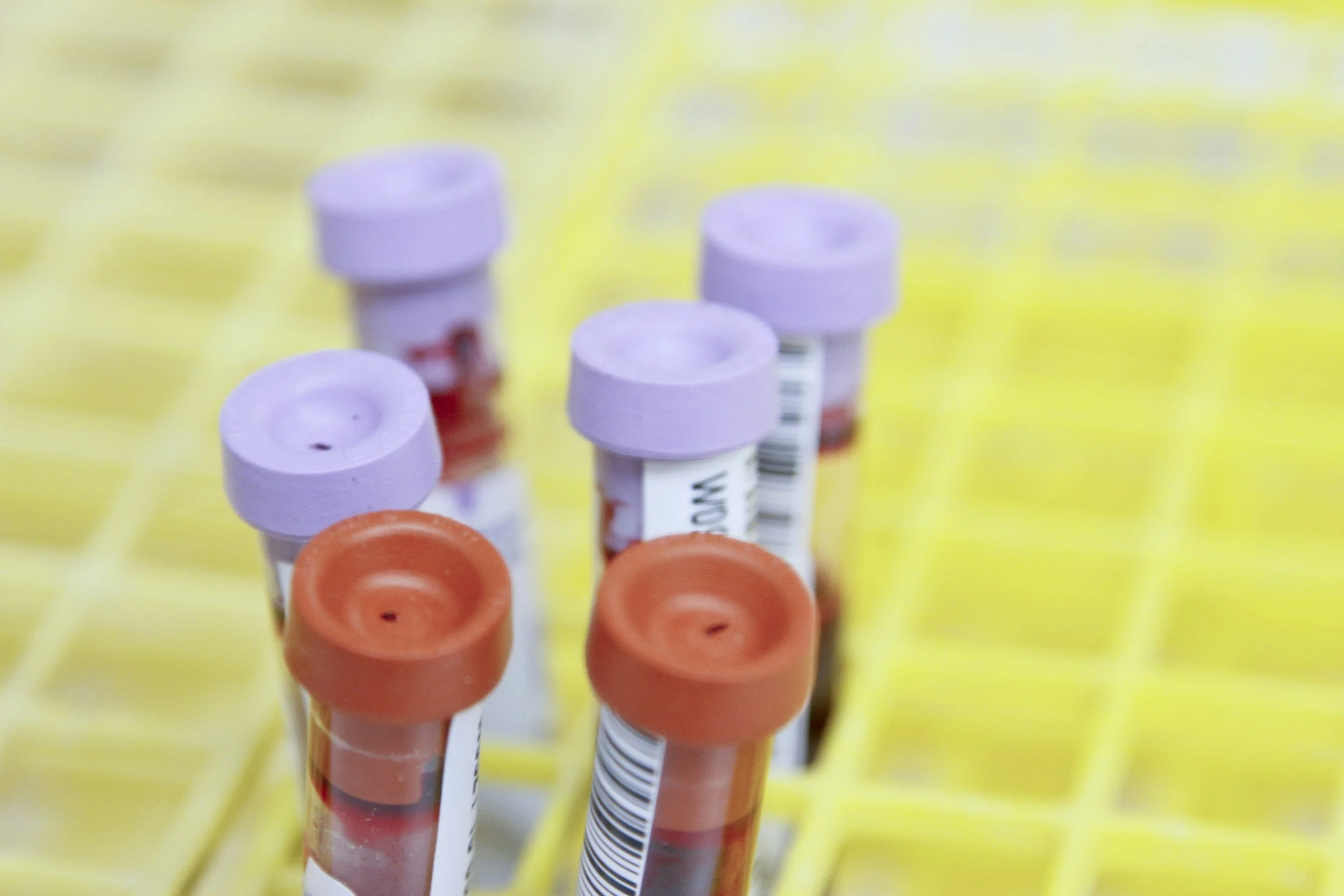
If you've been told your thyroid is fine but you're still exhausted, still cold, still losing hair, this is worth reading.
A normal thyroid result and a fully functioning thyroid are not always the same thing. The difference often comes down to what was actually tested.
What most thyroid panels include
The standard thyroid test ordered by most primary care providers is TSH, thyroid stimulating hormone. TSH is produced by the pituitary gland and tells the thyroid how much hormone to make. When TSH is elevated, it usually signals the thyroid is being pushed to work harder. When it's low, the thyroid may be overproducing.
TSH is a useful screening marker. It is not a complete picture of thyroid function.
What TSH doesn't tell you
TSH tells us what your brain is asking your thyroid to do. It doesn't tell us what your thyroid is delivering or whether what it delivers is getting into your cells and working.
The hormones that fill in that picture are Free T3 and Free T4.
Free T4 is the main hormone produced by the thyroid. It's largely inactive until it converts into Free T3, the active form that your cells actually use. That conversion happens primarily in the liver, gut, and peripheral tissues. If conversion is impaired by chronic stress, nutrient deficiencies, gut issues, or inflammation, Free T3 can be low even when TSH and T4 look normal.
The antibody piece
Thyroid antibodies, specifically TPO (thyroid peroxidase) and thyroglobulin antibodies, are another marker that rarely makes it onto a standard panel, but that tells us something important.
Elevated antibodies indicate that the immune system is attacking thyroid tissue. This is the hallmark of Hashimoto's thyroiditis, the most common cause of hypothyroidism. Hashimoto's can cause significant symptoms, fatigue, brain fog, hair thinning, weight changes, mood shifts, long before TSH ever moves out of range. Without antibody testing, it often goes unidentified for years.
What this means in practice
When I work with a patient who has thyroid-related symptoms, I look at the full panel: TSH, Free T3, Free T4, TPO antibodies, and thyroglobulin antibodies, alongside nutrient markers that affect thyroid function, like ferritin, vitamin D, and selenium. (Note: I am not suggesting you supplement selenium without guidance, I'd recommend discussing this with a provider who can review your full picture.)
The goal isn't to override what your primary care provider ordered. It's to fill in the gaps that routine testing wasn't designed to catch.
If your thyroid symptoms persist and your standard panel keeps coming back normal, it may be that no one has looked at the full picture yet. That's a reasonable next step, not a sign that something is being missed by your current provider, but an opportunity to look more completely.
If you'd like to talk through what a fuller workup might look like for you, I offer a free 15-minute wellness consult visit for women in Virginia, DC, and Maryland.
Not Feeling Like Yourself in Your 40s (Even With “Normal” Labs)?

If you’re in your 40s and keep thinking, “I just don’t feel like myself anymore,” you’re not alone.
Most women who find me describe a similar mix of things:
Afternoon crashes that hit hard. Brain fog that makes simple tasks feel harder than they should. Sleep that’s lighter or more restless. Mood swings or anxiety that feel new. Clothes fitting differently even though nothing huge has changed with food or movement. And then the kicker: being told that their labs are “normal.”
Common does not mean “nothing is happening.”
The midlife cluster no one really explained
In this season of life, symptoms rarely show up one at a time. More often, you get a cluster:
Fatigue and low energy
Brain fog or feeling “off” mentally
Lighter, broken, or less refreshing sleep
Mood shifts, irritability, or feeling more easily overwhelmed
Weight shifting or feeling “puffier” than before
None of these on their own are unusual. Together, they’re your body waving a flag that things have changed and need a different kind of attention.
What might be driving this in your 40s
There’s rarely a single villain. It’s usually several factors layering on top of each other:
Hormone shifts: Perimenopause can begin years before your period actually stops. Changes in estrogen and progesterone can affect sleep, mood, temperature, and how your body stores and uses energy.
Stress load and sleep debt: Years of caring for kids, aging parents, careers, and household tasks can keep your nervous system in “go” mode. Even if you don’t feel stressed, your body may be living on light, choppy sleep and high alert chemistry.
Gut and nutrient changes: Digestive symptoms, past diets, or chronic under‑fueling can affect how well you absorb key nutrients like iron and B vitamins, which are essential for energy and clear thinking.
Insulin sensitivity, PMOS, and metabolism: Early changes in blood sugar control and conditions like polyendocrine metabolic ovarian syndrome (PMOS, the condition previously called PCOS) can make it easier to gain and harder to lose, especially around the middle, even when you’re trying hard.
For many women, it’s some version of all of the above at once.
Why your labs keep coming back “normal”
Most routine lab panels are designed to catch disease, not to ask, “Is this person actually feeling well?” It’s possible for numbers to fall into a reference range while you still feel exhausted, foggy, and unlike yourself.
That doesn’t mean something serious is being missed, but it does mean your experience matters just as much as the printout.
Gentle places to start if you don’t feel like yourself
This isn’t a full treatment plan, but here are a few supportive places to begin:
Anchor your day with protein: Aim for a meaningful source of protein at breakfast and lunch to help steady energy and blood sugar.
Protect one sleep boundary: Choose one change, like a more consistent bedtime or a 30-60 minute wind‑down away from your phone, and commit to it most nights.
Notice patterns, not perfection: For a week, jot down when your worst energy or brain fog shows up, how you slept the night before, and roughly what your day looked like. You’re not judging; you’re collecting clues.
If you’ve been feeling this way for months and are tired of being told “everything looks fine,” you deserve someone to sit with the full picture, how you feel, your life context, and your labs, and treat you like a whole person.
This is the work I do every day with women in their 40s who are ready to stop brushing off “not myself” as just getting older.
If this resonates, you can start with my free “Not Feeling Like Myself” guide here:
Or learn about working together 1:1 here:
Not All Health Advice Is Created Equal: Why Your Provider's Credentials Actually Matter

You found someone online, maybe on Instagram, maybe in a Facebook group, who seems to really get it. They talk about hormones, adrenal fatigue, cortisol, gut health. They offer programs, recommend supplements, maybe even review your labs. And for a moment, it feels like someone is finally listening.
That feeling is real. But there's something worth understanding about who's on the other side of that advice.
The wellness space is full of people who sound clinical
Health coaching has grown into a massive industry, and many coaches are genuinely passionate about helping people. But passion and clinical training are not the same thing.
A health coach is not licensed to diagnose, prescribe, or treat. They have not completed years of clinical rotations. They have not managed patients with complex, overlapping conditions. They have not studied pharmacology, abnormal lab interpretation, or how to safely taper a medication. Most have not sat with a patient whose labs came back outside of normal range and had to make a clinical call in real time.
That's not a criticism, it's a scope of practice distinction. And when it comes to your hormones, your metabolic health, or your thyroid, scope of practice matters.
What clinical training actually gives you
As a board certified Family Nurse Practitioner with additional functional medicine certification, I didn't learn how to read labs from a course I took online. I learned by seeing patients, hundreds of them, over years of clinical practice. I learned what a pattern of abnormals looks like on paper, and what it looks like in a real person sitting in front of me.
I learned to ask: Is this thyroid result low because of a conversion issue, or because of something inflammatory driving it? Is this progesterone level truly low, or is it low because the blood draw wasn't timed correctly in the luteal phase? Is this woman's fatigue metabolic, hormonal, or is something else going on that we need to rule out first?
These are not questions a supplement protocol can answer. They require clinical judgment that develops over time, not weeks, but years.
Labs are not a DIY project
One of the things I see often: women who have ordered their own labs through a direct-to-consumer service, gotten results back, and then tried to interpret them on their own — or handed them to someone without the training to do it properly.
Abnormal lab values don't exist in isolation. Context matters. Timing matters. Your symptoms, your history, what else is going on in your body — all of it matters. A number outside of range isn't automatically a problem, and a number inside of range isn't automatically a pass. Knowing the difference is the clinical piece.
The same goes for supplements. What looks like a helpful protocol on the surface can be contraindicated depending on what's going on with your thyroid, your liver, your hormones. More is not better when it's not targeted.
You deserve someone who can actually treat you
This isn't about gatekeeping wellness. It's about making sure the person guiding your care has the training to do it safely.
At Rooted, I'm not just interpreting your labs, I'm synthesizing your full clinical picture, ordering additional workup when it's warranted, and creating a plan that accounts for how your hormonal, metabolic, and thyroid systems interact. When something is outside of normal, I know what to do with it.
If you've been piecing things together on your own and it's not adding up, that's not a failure on your part. It's a signal that you might need a different kind of support, one that starts with someone who is qualified to look at the whole picture.
Ready for care that goes deeper?
Rooted Functional Medicine | Virtual care for women in VA + DC
Why Your Metabolism Feels Different in Perimenopause

It's not about trying harder. It's about what's actually changing.
Same diet. Same routine. And suddenly nothing works the same way it used to.
Weight shifting to your midsection. Energy unpredictable. Sleep getting worse. And your doctor says your labs look fine.
If you're in your 40s, this might not be a willpower problem. It might be perimenopause, and more specifically, what shifting estrogen does to your metabolism.
Estrogen does more than you think
Estrogen plays a real role in how your body manages insulin, stores fat, and maintains muscle. When it starts to fluctuate, which can happen well before your period stops, the metabolic effects show up fast.
Insulin sensitivity drops. Fat storage shifts toward the midsection. Muscle mass starts to decline. Sleep gets disrupted, which drives up cortisol, which makes everything worse.
None of this is a character flaw. It's a hormonal shift with real downstream effects, and it responds to the right approach.
Why the labs look "normal"
Standard bloodwork isn't designed to catch this. A normal glucose and A1c rule out diabetes. They don't tell you whether insulin resistance is quietly building in the background.
And a single FSH number won't confirm perimenopause either, hormones fluctuate too much day to day. Symptoms and patterns tell a more reliable story than any one lab value.
What actually moves the needle
Protein at every meal- 30g is a good target. It stabilizes blood sugar and protects muscle.
Resistance training- even twice a week meaningfully improves insulin sensitivity.
Sleep- not a bonus, a metabolic lever. Poor sleep worsens everything else.
A full hormone and metabolic picture- not just a standard panel.
If you're in your 40s and things feel off but you keep being told your labs are fine, it may be that no one has looked at the right things yet.
Why Your Blood Sugar Looks Normal But You Still Have PCOS Symptoms
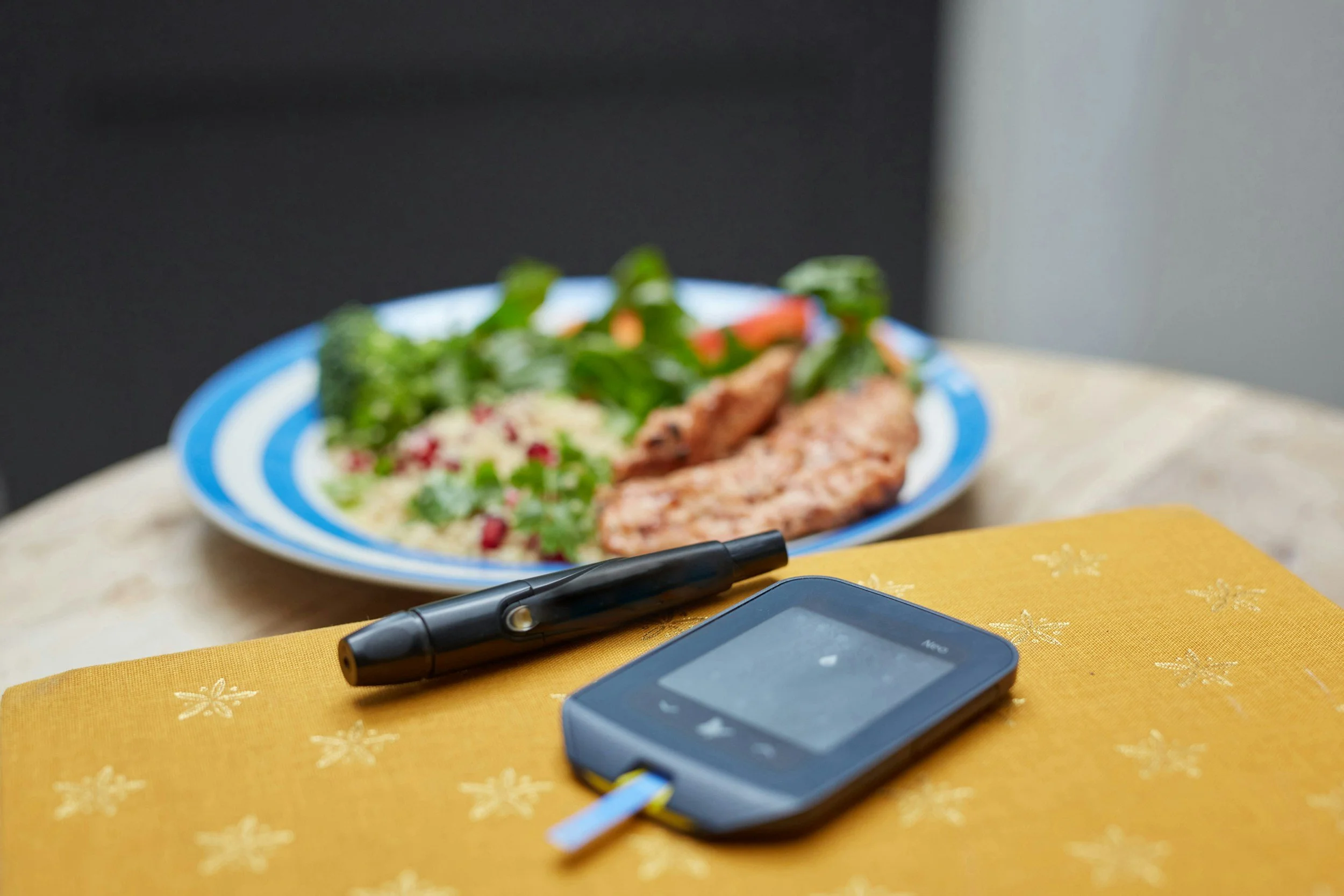
You’ve had labs done. Glucose is normal. A1c is fine. So why do you still have irregular cycles, jaw breakouts, energy crashes, and weight that won’t move?
The answer, for many women with PCOS, is insulin resistance and it’s being missed because providers are checking the wrong markers.
Insulin Resistance Can Be Present Long Before Blood Sugar Changes
Your body is good at keeping blood sugar in range. In early insulin resistance, the pancreas simply produces more insulin to compensate. Blood sugar stays normal. But that elevated insulin is already doing damage in the background; driving androgen production, promoting fat storage, disrupting your cycle.
By the time glucose starts to rise, insulin resistance has often been present for years.
This is why up to 70-80% of women with PCOS have insulin resistance, including lean women with “normal” labs.
The Labs That Actually Tell the Story
If these haven’t been ordered, ask about them:
Fasting insulin- not just fasting glucose
SHBG- low levels signal high androgen burden
Free testosterone and DHEA-S
Triglycerides and HDL (early metabolic red flags)
The pattern I see often: fasting insulin elevated, SHBG low, androgens at the top of range. None of it trips a conventional alarm. Together, it tells a clear story.
What Actually Moves the Needle
Addressing insulin resistance in PCOS isn’t about one intervention, it’s about changing the metabolic environment driving the hormonal disruption:
Protein-first meals to blunt insulin spikes (aim for 30g at breakfast)
Resistance training- one of the most effective insulin sensitizers available
Sleep and stress management- cortisol directly worsens insulin resistance
Targeted supplements or medications when appropriate, layered on top of the above
The right approach depends on your individual labs, symptoms, and phenotype. That’s what a thorough functional medicine workup is designed to sort out.
If you’ve been told your labs are normal but you’re still not feeling like yourself, it may not be that nothing is wrong, it may be that no one has looked at the right things yet.
Book a complimentary 15-minute discovery call at Rooted Functional Medicine to talk through your history and see if a root-cause approach makes sense for you.
Your Hormones and Your Metabolism Run on the Same Infrastructure

The connection that's keeping so many women stuck and what to do about it.
You've had your hormones tested. Maybe more than once. And yet the fatigue, the weight, the mood swings; they're still there.
Here's something that doesn't come up enough in a standard appointment: your hormones and your metabolism are not separate systems. They run on the same infrastructure. And when metabolism is dysregulated, hormones cannot fully come into balance, no matter how much you adjust them.
The Loop Most Providers Miss
Insulin resistance is one of the most underdiagnosed drivers of hormone imbalance in women. Here's why:
Elevated insulin signals the ovaries to produce excess androgens, a core driver of PCOS symptoms like irregular cycles, acne, and hair thinning.
High insulin suppresses SHBG (sex hormone binding globulin), leaving more estrogen free and unregulated in circulation.
Chronic stress raises cortisol, which directly suppresses progesterone and worsens insulin resistance simultaneously.
Declining estrogen in perimenopause further reduces insulin sensitivity, accelerating the metabolic-hormone spiral.
Treating hormones without addressing insulin, cortisol, and thyroid function is like adjusting the thermostat in a house with broken insulation. The signal is right. The infrastructure isn't.
What I Actually Look For
After the first visit, I always assess the metabolic foundation before layering in targeted hormone support:
Fasting insulin + HOMA-IR- not just glucose. A 'normal' fasting glucose can coexist with significant insulin resistance.
Full thyroid panel- free T3, free T4, reverse T3, and antibodies. TSH alone misses too much.
And before any labs, I want to know about protein and fiber intake, sleep quality, and movement habits. These aren't wellness add-ons, they are clinical data that directly shape the hormonal environment.
The Takeaway
If you've been chasing hormone balance without lasting results, the metabolic layer may not have been fully addressed. That's not a failure, it's a gap in how hormone health is typically evaluated.
At Rooted Functional Medicine, I work with women in Virginia and Washington DC who are tired of being told their labs are normal while they feel anything but. We start with the full picture, because that's the only way to actually fix it.
Ready to get to the root of it?
The One Metabolic Issue That's Quietly Disrupting Your Hormones

The missing piece most hormone conversations skip entirely.
If you’ve been working on your hormones, adjusting medications, trying new supplements, overhauling your diet, and you’re still not feeling like yourself, there’s a good chance one piece of the puzzle hasn’t been addressed yet: your metabolism.
More specifically, insulin.
Here’s what most providers don’t explain
Insulin doesn’t just regulate blood sugar. When it’s chronically elevated, a state called insulin resistance, it disrupts nearly every other hormonal system in your body. It signals the ovaries to overproduce androgens (driving PCOS symptoms like acne, hair loss, and irregular cycles). It interferes with thyroid hormone conversion. It elevates cortisol, which suppresses progesterone. It promotes fat storage, and that stored fat produces its own estrogen.
All of that from one metabolic issue that most standard panels don’t even test for properly.
Why it gets missed
Standard blood sugar tests (fasting glucose, HbA1c) are designed to catch diabetes, not early insulin resistance. A fasting insulin level is far more revealing, but it’s rarely included in routine bloodwork. So women spend years being told their labs are normal while the root cause goes unaddressed.
The bottom line
Treating hormones without evaluating metabolic function is like filling a bathtub with the drain open. If the metabolic piece isn’t part of the conversation, you’re working with an incomplete picture.
At Rooted, this is where we start, not with a prescription, but with the full picture.
Think this might be your missing piece?
Book a free 15-minute consult at rootedfunctionalmedicine.com. We’ll talk through your symptoms and find out if Rooted is the right fit.
Turning Down the Noise of “New Year, New You”

Why sustainable change doesn’t start with intensity and what actually works instead
January is loud.
Everywhere you look, there’s a new plan:
Reset your gut.
Fix your hormones.
Optimize your metabolism.
Do more. Cut more. Start now.
The message is subtle but persistent:
If you’re not making dramatic changes in January, you’re already behind.
From a clinical perspective, this mindset creates more harm than momentum.
The problem with intensity-based change
Most “New Year, New You” messaging relies on urgency.
New habits. New rules. New expectations, all at once.
But physiology doesn’t respond well to pressure.
When change is driven by intensity rather than intention, the body often responds with:
increased stress signaling
inconsistent energy
digestive disruption
poor adherence over time
Not because the person lacks discipline, but because the approach ignores sustainability.
Sustainable change is quieter and more effective
In clinical care, progress isn’t defined by how much you overhaul your life in January.
It’s defined by whether the changes you make can still exist in March… and June… and next January.
Sustainable change tends to look less dramatic:
fewer goals, chosen deliberately
adjustments that reduce stress rather than add to it
habits that support physiology instead of fighting it
This isn’t passive.
It’s strategic.
Why goals fail when they aren’t grounded
Many health goals fail not because they’re unreasonable, but because they’re disconnected from the body’s current state.
For example:
increasing exercise without addressing recovery or fueling
cutting calories while stress hormones are already elevated
layering supplements without understanding absorption or tolerance
Without context, even “healthy” goals can backfire.
Clinical care starts by asking:
What does this body need right now to move forward safely and effectively?
A different way to think about January
Instead of asking:
“What do I need to change?”
Try asking:
“What needs support?”
“What feels unsustainable?”
“What would make my life feel steadier, not stricter?”
These questions don’t create viral content.
But they create results.
Wrap up
You don’t need a new version of yourself this year.
You need clarity.
You need direction.
You need a plan that respects both your physiology and your real life.
That’s where sustainable change begins; quietly, intentionally, and over time.
Little by Little Becomes a Lot: How to Maintain Healthy Habits During the Holiday Season

The holiday season is full of connection, celebration, and comfort food, but it’s also one of the biggest stress tests on your gut health, metabolism, hormones, and nervous system.
Many women fall into one of two extremes this time of year: trying to be “perfect,” or deciding to “start over in January.”
Neither approach supports long-term health.
Instead, the most powerful strategy is this: protect a few key habits consistently, and let the rest be flexible. Little by little truly does become a lot.
Why the Holidays Disrupt Gut Health & Metabolism
From a functional medicine lens, the holiday season often brings:
Blood sugar swings
Increased alcohol and sugar
Less movement
Poor sleep
Heightened stress
Digestive symptoms like bloating, reflux, and constipation
Together, these stress your gut microbiome, hormone balance, and metabolic function, often showing up as:
Afternoon crashes
Cravings
Stubborn weight gain
Poor sleep
Increased anxiety
Digestive discomfort
The goal isn’t restriction, it’s resilience.
The 5 Habits That Matter Most (Even in December)
You don’t need a full wellness overhaul to protect your health through the holidays. These five habits alone support gut health, metabolic health, and hormone balance:
1. Protein at Breakfast
Supports stable blood sugar, reduces cravings, and improves energy.
2. Hydrate Before Caffeine
16–20 oz of water before coffee supports digestion, detoxification, and metabolism.
3. Daily Fiber From Real Food
Vegetables, berries, beans, flax, and chia support gut motility, estrogen metabolism, and inflammation control.
4. Walk After Meals
Even 5–10 minutes improves digestion and prevents blood sugar spikes.
5. Protect Your Sleep Window
Consistent sleep regulates cortisol, insulin sensitivity, and hormone signaling.
You don’t need perfection, only consistency.
Why “Little by Little” Works for Hormones, Gut & Metabolism
Small daily actions create:
Better blood sugar control
Improved gut motility
Reduced inflammation
More stable hormones
Better energy and sleep
This is how real transformation happens, not through extreme cleanses or crash diets, but through repeatable habits that support your physiology.
A Healthier Holiday Mindset
Instead of asking:
“Am I being perfect?”
Try:
“What’s one small thing I can do today to support my body?”
One walk.
One protein-rich meal.
One earlier bedtime.
One fiber-rich food.
That’s how momentum is built, even during the holidays.
Final Thought
You don’t need to start over in January if you never fully stop caring for yourself in December. Little by little truly does become a lot.
If you’d like guidance creating sustainable habits that actually work with your real life, I’d love to support you.

Your Gut Health Matters More Than You Think
Your gut health affects everything, from energy and mood to hormones and immune balance. This post shares four simple, science backed steps to support digestion, reduce bloating, and nourish your microbiome, plus when to seek deeper functional medicine support.
If your energy feels off, your digestion seems unpredictable, or your mood swings feel stronger than usual, your gut may be asking for attention. The gut isn’t just where food is digested; it’s the foundation of immune health, hormone balance, mental clarity, and overall vitality.
At Rooted Functional Medicine, we view gut health as the starting point for total wellness, because when your gut is balanced, the rest of your body can follow.
1. Feed the Good Bacteria
Your gut is home to trillions of bacteria, some helpful, some harmful. The balance between them determines how you feel day to day. One of the simplest ways to support this balance is through food.
Try to:
Include 25–30 grams of fiber daily (from plants, fruits, seeds, and legumes).
Add fermented foods like yogurt, kefir, sauerkraut, or kimchi a few times a week.
Rotate your produce, aim for different colors each week to feed diverse bacteria.
Small, consistent changes are more effective than restrictive diets. Your gut thrives on variety and nourishment, not deprivation.
2. Support Digestion Naturally
Your digestive system works best when it feels supported — not rushed. Before reaching for supplements, try resetting some daily habits that make a big difference:
Chew slowly and take a few deep breaths before eating.
Hydrate throughout the day (not just with meals).
Move gently after eating, even a short walk aids motility.
Reduce chronic stress, which can disrupt digestion as much as poor diet.
These mindful habits help your body shift into “rest and digest” mode, a state where healing and balance can actually occur.
3. Listen to Your Gut (Literally)
Your gut often communicates before labs do. If you notice signs like:
Bloating after meals
Irregular bowel movements
Food sensitivities
Fatigue or brain fog
…these may be your body’s way of asking for deeper support. While online tips are a great start, every gut is unique, which means what works for one person might not work for another.
4. Take the Next Step Toward a Balanced Gut
Sometimes, surface-level changes aren’t enough. Comprehensive functional lab testing (like the GI-MAP) can reveal the “why” behind your symptoms, identifying imbalances in bacteria, yeast, digestion, and inflammation.
Working with a functional medicine provider ensures you get personalized recommendations that address your specific needs, not just temporary relief.

Gut Health: Why Getting to the Root Matters
Gut Health: Why Getting to the Root Matters
Learn how functional medicine helps uncover the root causes of gut dysbiosis. Stop wasting time and money on quick fixes and discover a gut-friendly recipe to support digestion naturally.
Why Gut Health Matters
Your gut is more than just a digestive system; it’s home to trillions of bacteria that impact your immune system, hormone balance, energy, and even mood. When these bacteria fall out of balance, it’s called gut dysbiosis. Dysbiosis can cause bloating, constipation, fatigue, brain fog, or stubborn skin issues. Many people spend months or even years trying supplements, diets, or medications to fix their gut without ever knowing what’s actually wrong.
The Problem With Quick Fixes
Correcting gut health isn’t about chasing every wellness trend. If you don’t understand the root cause, time and money can be wasted on short term solutions. For example, bacterial overgrowth, food sensitivities, inflammation, or stress related imbalances can all look the same on the surface, but require very different solutions. In functional medicine, we use targeted lab testing and personalized treatment plans to uncover the why behind symptoms, so patients finally get answers instead of endless trial and error.
Small Changes Make a Big Difference
The good news is that your gut can heal with the right support. Everyday choices like eating whole foods, managing stress, improving sleep, and adding probiotic-rich meals can make a lasting impact. Here’s a quick, easy recipe to nourish your microbiome:
Gut-Friendly Turkey & Veggie Stir-Fry (Serves 4)
Why it’s gut-friendly:
Lean protein from ground turkey supports stable blood sugar and muscle repair.
Colorful vegetables add fiber, antioxidants, and prebiotics to feed good gut bacteria.
Simple seasonings keep it light on the digestive system but still full of flavor.
Ingredients:
1 lb ground turkey (93% lean or leaner)
2 tbsp avocado oil (or olive oil)
2 cloves garlic, minced
1 inch fresh ginger, grated (optional for extra gut support)
1 red bell pepper, sliced
1 zucchini, diced
2 cups broccoli florets
3 tbsp coconut aminos (gut-friendly alternative to soy sauce)
1 tbsp sesame seeds (optional topping)
2 cups cooked brown rice or quinoa (for serving)
Instructions:
Heat oil in a large skillet or wok over medium heat. Add garlic and ginger; sauté until fragrant (1–2 minutes).
Add ground turkey and cook until browned, breaking into crumbles with a spatula.
Stir in bell pepper, zucchini, and broccoli. Cook for 5–7 minutes until veggies are tender-crisp.
Add tamari/coconut aminos, toss well, and let flavors combine for 2–3 minutes.
Serve over warm brown rice or quinoa, topped with sesame seeds if desired.
Nutrition Boosts:
25g protein per serving (with turkey + quinoa)
High in fiber from veggies and whole grains
Naturally gluten-free and family-approved
Learn how functional medicine helps uncover the root causes of gut dysbiosis. Stop wasting time and money on quick fixes and discover a gut-friendly recipe to support digestion naturally.
Why Gut Health Matters
Your gut is more than just a digestive system; it’s home to trillions of bacteria that impact your immune system, hormone balance, energy, and even mood. When these bacteria fall out of balance, it’s called gut dysbiosis. Dysbiosis can cause bloating, constipation, fatigue, brain fog, or stubborn skin issues. Many people spend months or even years trying supplements, diets, or medications to fix their gut without ever knowing what’s actually wrong.
The Problem With Quick Fixes
Correcting gut health isn’t about chasing every wellness trend. If you don’t understand the root cause, time and money can be wasted on short term solutions. For example, bacterial overgrowth, food sensitivities, inflammation, or stress related imbalances can all look the same on the surface, but require very different solutions. In functional medicine, we use targeted lab testing and personalized treatment plans to uncover the why behind symptoms, so patients finally get answers instead of endless trial and error.
Small Changes Make a Big Difference
The good news is that your gut can heal with the right support. Everyday choices like eating whole foods, managing stress, improving sleep, and adding probiotic-rich meals can make a lasting impact. Here’s a quick, easy recipe to nourish your microbiome:
Gut-Friendly Turkey & Veggie Stir-Fry (Serves 4)
Why it’s gut-friendly:
Lean protein from ground turkey supports stable blood sugar and muscle repair.
Colorful vegetables add fiber, antioxidants, and prebiotics to feed good gut bacteria.
Simple seasonings keep it light on the digestive system but still full of flavor.
Ingredients:
1 lb ground turkey (93% lean or leaner)
2 tbsp avocado oil (or olive oil)
2 cloves garlic, minced
1 inch fresh ginger, grated (optional for extra gut support)
1 red bell pepper, sliced
1 zucchini, diced
2 cups broccoli florets
3 tbsp coconut aminos (gut-friendly alternative to soy sauce)
1 tbsp sesame seeds (optional topping)
2 cups cooked brown rice or quinoa (for serving)
Instructions:
Heat oil in a large skillet or wok over medium heat. Add garlic and ginger; sauté until fragrant (1–2 minutes).
Add ground turkey and cook until browned, breaking into crumbles with a spatula.
Stir in bell pepper, zucchini, and broccoli. Cook for 5–7 minutes until veggies are tender-crisp.
Add tamari/coconut aminos, toss well, and let flavors combine for 2–3 minutes.
Serve over warm brown rice or quinoa, topped with sesame seeds if desired.
Nutrition Boosts:
25g protein per serving (with turkey + quinoa)
High in fiber from veggies and whole grains
Naturally gluten-free and family-approved