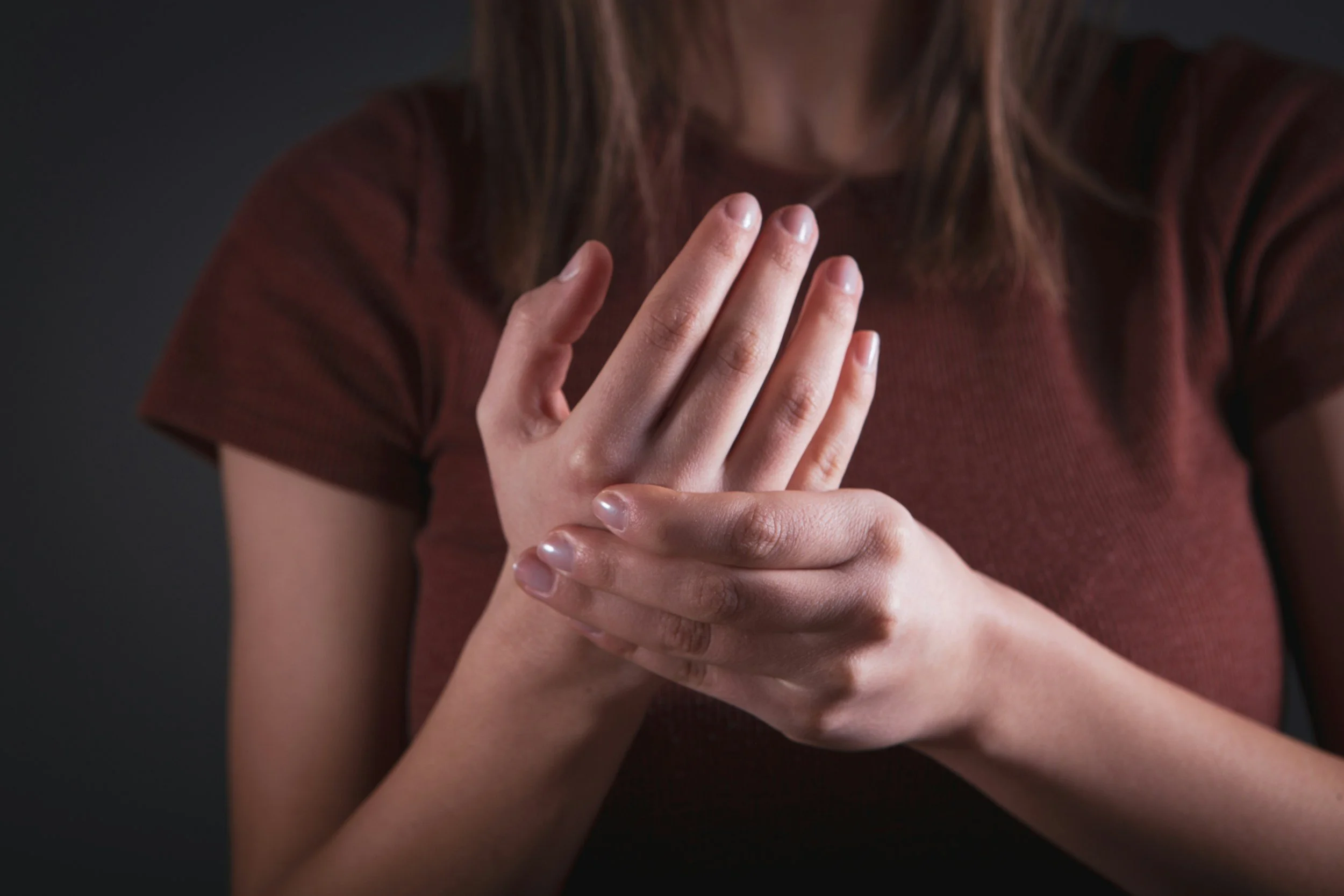
It doesn't swell or turn red, but it can shape your energy, blood sugar, and how you recover from stress.
When most people hear "inflammation," they picture a sprained ankle. Swelling, heat, redness. That kind is useful. It shows up, does its job, and leaves.
There's another kind that doesn't leave.
It's quieter. You can't see it in the mirror. But it can sit underneath the fatigue that doesn't lift, the blood sugar that keeps creeping up, and the sense that your body takes longer to bounce back than it used to.
Two kinds of inflammation
Short-term inflammation is protective. It's how your body responds to an injury or infection, and then it switches off.
Chronic, low-grade inflammation is different. It's a steady, background level of immune activity that never fully resolves. Researchers consider it a major contributor to many of the conditions that matter most over a lifetime: more than half of all deaths worldwide are attributed to inflammation-related diseases such as heart disease, stroke, diabetes, and fatty liver disease [1].
That's not meant to frighten you. It's meant to explain why this is worth paying attention to long before anything shows up as a diagnosis.
What keeps it switched on
The pattern I see often is that no single thing is responsible. It's the load, several everyday inputs stacking up at once.
A large review in Nature Medicine lists the most common drivers of chronic inflammation, including physical inactivity, excess visceral fat, changes in the gut microbiome, diet, social isolation, psychological stress, disturbed sleep, and a disrupted daily rhythm [1].
Look at that list again. Food is on it, but it's one item out of many.
That's why women who have already cleaned up their diet can still feel inflamed. The plate matters. So does the rest of the day.
Where it meets blood sugar
Fat tissue isn't just storage. It's active tissue that sends out signals, and when it expands, especially around the organs, it can release more inflammatory messengers.
Some of those messengers, like TNF-α, have been shown to make cells less responsive to insulin [2]. In other words, inflammation and insulin resistance tend to feed each other. That connection is part of why we talked last week about how weight is often the result of something else, not the starting point. If you missed it, you can read why "just lose weight" isn't a plan.
The encouraging part: markers of inflammation have come down with intensive lifestyle changes [2]. This is a pattern that responds to care.
Where it meets sleep and stress
Sleep is one of the most underestimated pieces here.
A meta-analysis of cohort and sleep-deprivation studies found that sleep disturbance was linked with higher levels of two common inflammatory markers, CRP and IL-6 [3]. Poor sleep isn't just making you tired, it's part of the inflammatory picture.
Stress plays in, too. Cortisol normally helps keep inflammation in check. But research on long-term stress suggests that, over time, the body's tissues can become less responsive to cortisol's signal, which makes it harder to regulate inflammation the way it should [4]. If you've ever felt wired and tired at the same time, I wrote more about that in why you're waking at 3 a.m.
So when someone tells me they're sleeping five hours, running on stress, and eating perfectly, I don't see a nutrition problem. I see a load problem.
What actually moves the needle
There's no single food, product, or protocol that "fixes" inflammation. What helps is lowering the load across the board, consistently, not perfectly.
Move regularly. Regular exercise has anti-inflammatory effects, partly by reducing visceral fat and partly through the effect of each session itself [5]. Strength work counts, I explained why in how muscle shapes blood sugar.
Protect sleep like it's treatment. Because, in this context, it is.
Take stress seriously. Not as a personality trait, but as a physical input.
Eat to nourish, not to restrict. Enough food, enough protein and fiber, and fewer extremes.
Stay connected. Social isolation is on the list of drivers for a reason [1].
More is not always better. The same review on exercise notes that very heavy training loads can suppress immune function [5]. The goal is steady, not punishing.
A note of caution
Inflammation is real, but it's also become a catch-all word online. Not every symptom is "inflammation," and not every inflamed feeling is the same thing. Joint pain, swelling, ongoing digestive symptoms, or fatigue that's getting worse deserve a proper evaluation, not a guess. And if you're on medication for blood sugar, blood pressure, or an autoimmune condition, that's often a key part of the plan, not a sign you failed at lifestyle.
What I look for is the pattern: how you're sleeping, what your stress load really is, how your blood sugar and energy behave, and what's changed over time. That's where the real answers usually are.
If any of this sounds familiar, the Start Here form is the best place to begin. It only takes a few minutes, and once it's in, you'll be able to choose a time that works for you. Start Here
— Miranda Rozecki, FNP-BC, IFMCP
References
Furman D, Campisi J, Verdin E, et al. Chronic inflammation in the etiology of disease across the life span. Nature Medicine, 2019. https://pmc.ncbi.nlm.nih.gov/articles/PMC7147972/
Shoelson SE, Lee J, Goldfine AB. Inflammation and insulin resistance. Journal of Clinical Investigation, 2006. https://pmc.ncbi.nlm.nih.gov/articles/PMC1483173/
Irwin MR, Olmstead R, Carroll JE. Sleep disturbance, sleep duration, and inflammation: a systematic review and meta-analysis of cohort studies and experimental sleep deprivation. Biological Psychiatry, 2016. https://pubmed.ncbi.nlm.nih.gov/26140821/
Cohen S, Janicki-Deverts D, Doyle WJ, et al. Chronic stress, glucocorticoid receptor resistance, inflammation, and disease risk. Proceedings of the National Academy of Sciences, 2012. https://pmc.ncbi.nlm.nih.gov/articles/PMC3341031/
Gleeson M, Bishop NC, Stensel DJ, et al. The anti-inflammatory effects of exercise: mechanisms and implications for the prevention and treatment of disease. Nature Reviews Immunology, 2011. https://pubmed.ncbi.nlm.nih.gov/21818123/